
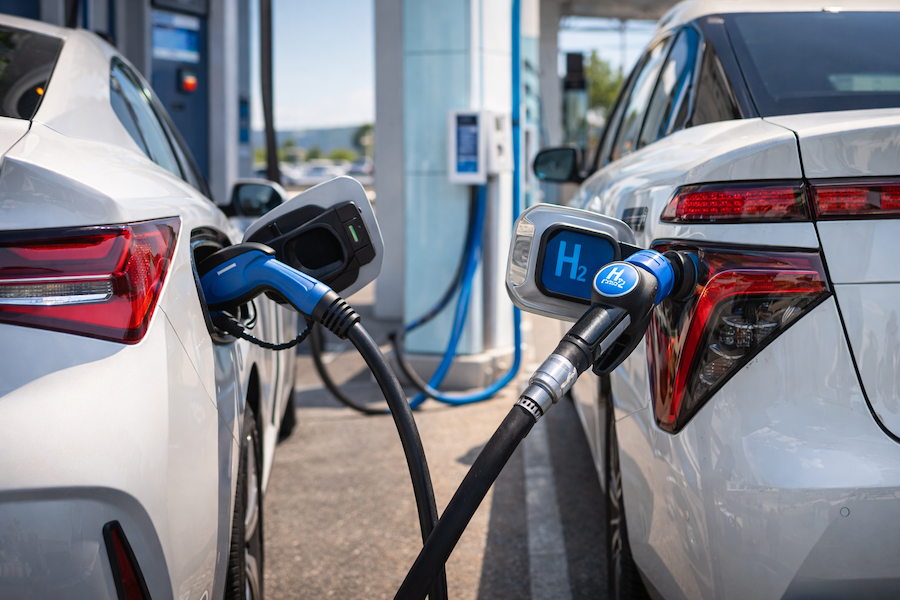
The debate around electric vs hydrogen car technology is becoming increasingly relevant as countries transition toward cleaner transportation. Both options aim to reduce carbon emissions and reliance on fossil fuels, but they differ significantly in how they generate power, how they are fueled, and how practical they are for everyday drivers.
If you are considering a zero-emission vehicle, understanding the core differences between electric and hydrogen cars is essential.
What Is an Electric Car?
An electric car runs entirely on electricity stored in a battery.
How it works
- A rechargeable lithium-ion battery stores energy
- An electric motor converts electricity into motion
- The car is charged via a plug-in charging station
Electric vehicles (EVs) produce no tailpipe emissions.
What Is a Hydrogen Car?
A hydrogen car typically uses a fuel cell system.
How it works
- Hydrogen gas is stored in high-pressure tanks
- A fuel cell converts hydrogen into electricity
- The electricity powers an electric motor
The only byproduct is water vapor.
Key Differences: Electric vs Hydrogen Car
Although both are considered clean technologies, their infrastructure and energy sources differ greatly.
1. Refueling vs Charging
Electric Cars:
- Charged at home or public charging stations
- Charging time ranges from 30 minutes (fast charging) to several hours
Hydrogen Cars:
- Refueled at hydrogen stations
- Refueling takes about 3–5 minutes
Hydrogen cars offer faster refueling, but hydrogen stations are extremely limited in most countries.
2. Infrastructure Availability
This is one of the biggest practical differences.
Electric Vehicles:
- Rapidly expanding charging networks
- Home charging widely available
- Supported by government incentives in many regions
Hydrogen Vehicles:
- Very few hydrogen refueling stations
- Infrastructure mostly limited to select areas
In terms of availability, electric cars currently have a major advantage.
3. Energy Efficiency
Energy efficiency plays a significant role in sustainability.
Electric Cars:
- Around 70–90% energy efficiency from battery to wheels
- Minimal energy loss during operation
Hydrogen Cars:
- Lower overall efficiency due to hydrogen production
- Energy is lost during electrolysis, compression, transport, and conversion
Electric vehicles are generally more energy-efficient overall.
4. Environmental Impact
Both are marketed as eco-friendly options.
Electric Vehicles:
- Zero tailpipe emissions
- Environmental impact depends on electricity source
- Battery production has environmental costs
Hydrogen Vehicles:
- Only emit water vapor
- Most hydrogen today is produced from natural gas
- “Green hydrogen” production is still limited
Electric vehicles currently have the cleaner lifecycle profile when powered by renewable electricity.
5. Range Comparison
Range anxiety is often a concern.
Electric Cars:
- Typical range: 250–500 km (varies by model)
- Rapid improvements in battery capacity
Hydrogen Cars:
- Typical range: 500–650 km
- Comparable to traditional gasoline vehicles
Hydrogen vehicles often offer slightly longer range per refill.
6. Cost Considerations
Cost is a major deciding factor.
Electric Vehicles:
- Wide price range available
- Lower maintenance costs
- Electricity cheaper than gasoline in many regions
Hydrogen Vehicles:
- Limited models available
- High vehicle cost
- Hydrogen fuel can be expensive
Electric cars are currently more accessible to average consumers.
Maintenance and Reliability
Electric Cars:
- Fewer moving parts
- Lower maintenance requirements
- No oil changes
Hydrogen Cars:
- Complex fuel cell systems
- Limited service infrastructure
Electric vehicles typically have simpler mechanical systems.
Safety Considerations
Both technologies are heavily regulated.
Electric Cars:
- Battery protection systems
- Advanced thermal management
Hydrogen Cars:
- Reinforced hydrogen tanks
- Strict safety standards
Both are considered safe when manufactured according to modern standards.
Future Potential
The future of clean mobility depends on scalability.
Electric Vehicles:
- Rapid adoption worldwide
- Expanding charging networks
- Falling battery costs
Hydrogen Vehicles:
- Potential in heavy transport (trucks, buses)
- Infrastructure challenges
- Higher production complexity
Many experts believe hydrogen may be more suitable for commercial transport rather than personal cars.
Electric vs Hydrogen Car: Which Is Better?
The answer depends on priorities.
Choose Electric If:
- You want widespread infrastructure
- You can charge at home
- You want lower long-term costs
Choose Hydrogen If:
- You have access to hydrogen stations
- You prioritize quick refueling
- You value extended range
At present, electric vehicles are more practical for most drivers.
How Does This Compare to Hybrid Vehicles?
If you are unsure about going fully electric, you may want to explore how electric vehicles compare to hybrids. For a detailed comparison, see Electric Car vs. Hybrid, which explains the benefits and trade-offs between fully electric and partially electric systems.
Common Questions About Electric vs Hydrogen Car
Are hydrogen cars truly zero-emission?
At the vehicle level, yes. However, hydrogen production methods affect overall emissions.
Are electric cars cheaper to maintain?
Yes, they generally require less maintenance due to fewer moving parts.
Is hydrogen the future of transportation?
Hydrogen may play a key role in heavy industry and long-haul transport, but electric vehicles currently dominate the passenger car market.
Conclusion
The electric vs hydrogen car debate highlights two different paths toward sustainable transportation. Electric vehicles currently lead in infrastructure, efficiency, affordability, and global adoption. Hydrogen vehicles offer fast refueling and strong range potential but face major infrastructure and cost challenges.
For most private consumers today, electric cars represent the more practical and scalable solution. However, hydrogen technology may become increasingly important in sectors where battery limitations are more pronounced.
The future of mobility may not be about choosing one over the other, but about using each technology where it performs best.

0 Comments